I Watched Google Kill Their Websites. Then Google Came for Mine.
This is part of a series. The sourced record: The Google Record.
The Article
In September 2023, Google rolled out the Helpful Content Update. The name was generous. In practice, it was a purge. Dozens of affiliate websites lost 70 to 90 percent of their search traffic in days. Some plainly spammy, some merely thin. Didn't matter. Years of work, wiped out by an algorithm with a cheerful name.
I wrote an article about it.
Spent a week on the research. Four hundred euros on the custom artwork alone. Because I didn't want a good article, I wanted a great one. It became the definitive Dutch-language analysis of the HCU: what happened, who got hit, and what it meant for the future of search.
It went viral. LinkedIn posts sharing it racked up thousands of views. People I'd never met reached out asking if Start24 was for sale. Big names in the industry sent messages. One of the biggest Dutch marketing publications invited me to their studio for an interview about it. Thousands of referral visits poured in from places I'd never been linked before.
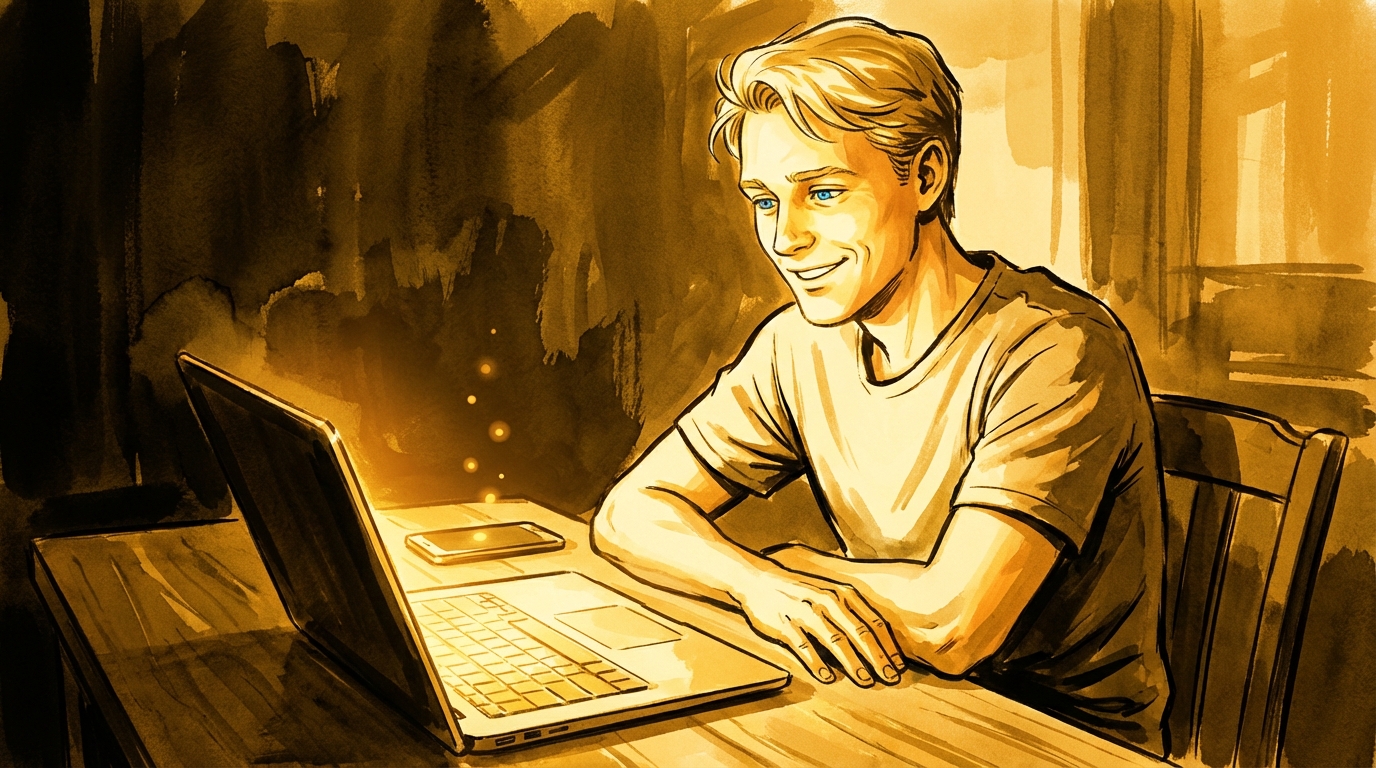
Here's the thing: I enjoyed it.
Not in a cruel way. But my site, Start24, didn't just survive the HCU. It tripled in search traffic. The site I'd poured years into, the reviews where I actually tested every product, the guides where I told readers "this hosting company is bad, don't use it" when the hosting company was bad. All of it was being rewarded. Quality was winning. I was winning.
I knew people whose traffic had evaporated. Dutch affiliates, international SEO folks, people I'd met at conferences and in masterminds. Most of them ran the kind of sites you'd expect to get hit: mass-produced content, thin reviews, keyword-first everything. A perfectly valid business model. Test fast, scale hard, optimize. It made many of them a lot of money and still does.
But it wasn't what I did. I was the guy who spent a full week testing the actual server speeds of twenty hosting providers. Not reading spec sheets. Running the tests. I turned down affiliate deals with companies I didn't believe in. I spent four hundred euros on artwork for a single article about an algorithm update. And Google had looked at all of this and said: yes. This is what we want.
I watched other sites flatline with something uncomfortably close to vindication.
Looking back, that was the most dangerous feeling I could've had.
The Hit
June 2025. Core update.
I'm not going to show you the traffic chart. If you've been through this, you already know what it looks like. If you haven't, imagine watching a heart monitor flatline, except it's your income, your pride, and your belief system all at once.
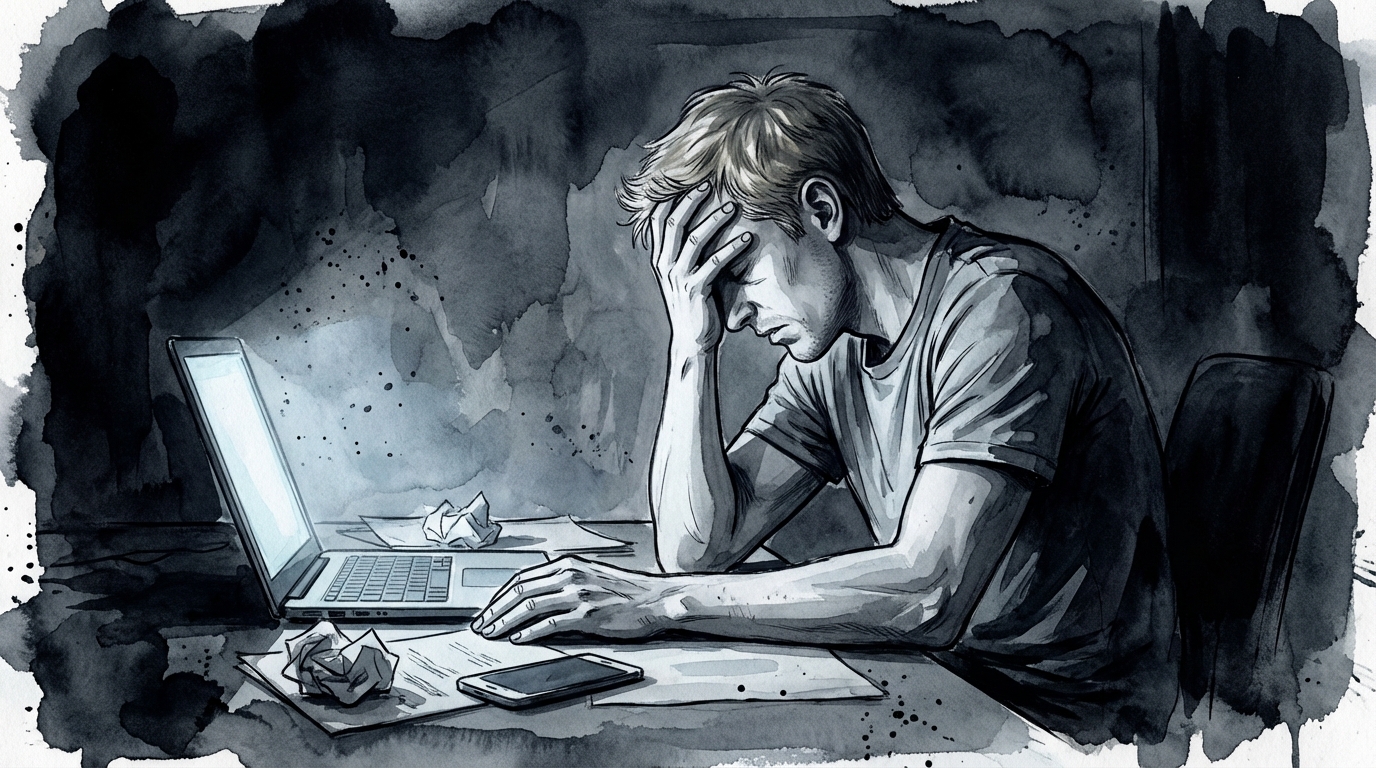
Start24's traffic collapsed. The kind of decline where you refresh Search Console three times because surely the data is broken. You close the laptop, wait an hour, check again. Nothing changes.
The money hurt. But money was the smaller part.
I'd built the best site in its niche. My readers knew it, my competitors knew it, and Google had agreed for two straight years. Then overnight, that same algorithm decided I deserved close to nothing. No explanation, no appeal, no human involved in the decision at all.
You can't contest it. There's no inbox, no court, no process. Just a traffic chart that won't stop falling and a support page that reads like it was written for a different species.
The Shame
Here's the part nobody writes about in their "how I recovered from a Google update" blog post: the shame.
I was the guy who wrote the article. The definitive analysis of how the HCU was working as intended, how Google was finally separating quality from garbage. That article was cited in industry newsletters. People quoted it at meetups. It had become a reference point for the idea that if you build something truly good, Google will recognize it.
Now Google had decided that my site, the very site the article was about, was garbage.
The irony was physically painful.
Meanwhile, the people who'd always done things differently were doing fine. The scale guys, the build-ten-sites-and-see-what-sticks crowd. Some of them thriving. Not because they'd gamed the system. Because Google's definition of quality never had anything to do with actual quality.
Three Weeks in a Village
When I feel like shit, I isolate. I don't want to talk about it, I don't want comfort, I don't want to be around people. I want to sit with it until it passes.
I was living with my then-girlfriend at the time, and I was in a terrible mood. My dad was on holiday and has a house in a quiet village in the center of the country. So I went there.
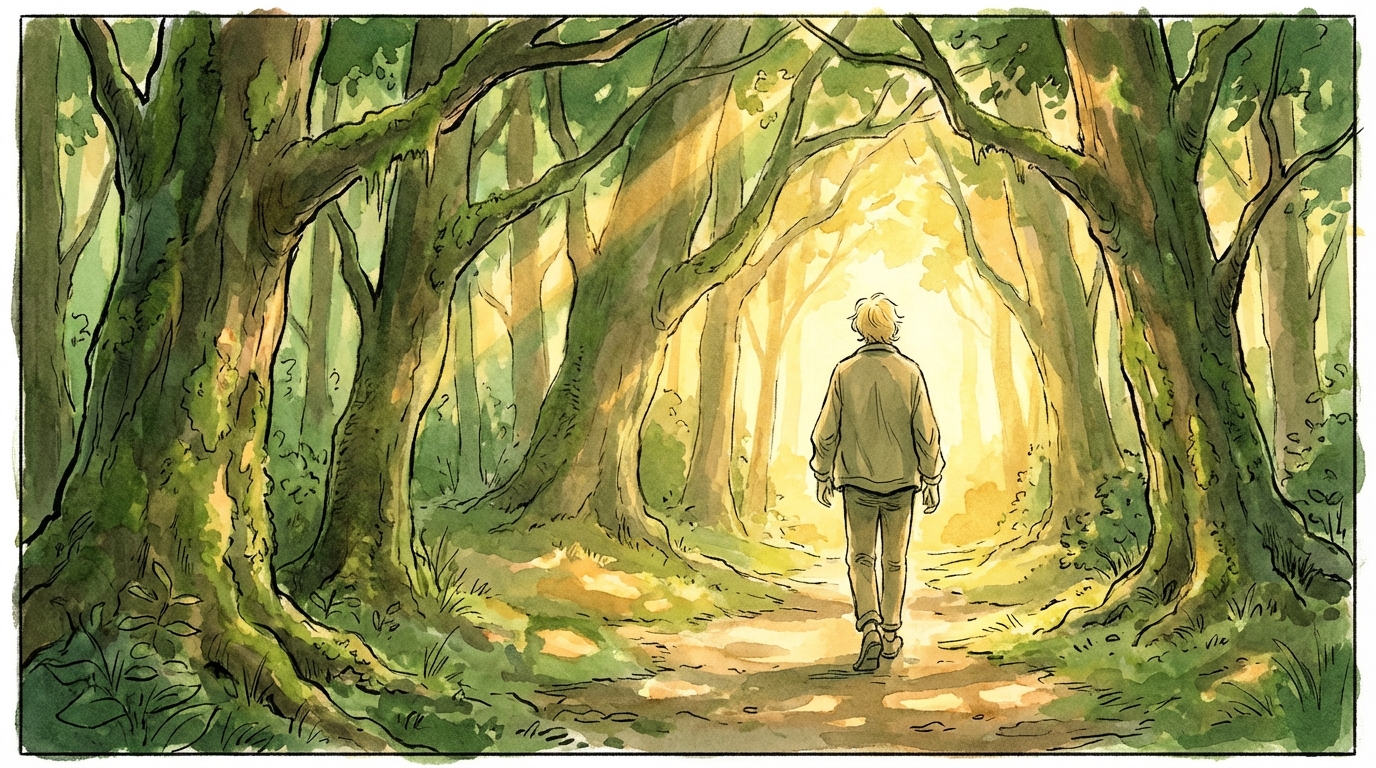
Honestly? The days were fine. The weather was incredible. I walked in the forest. I sat outside. It was peaceful.
But underneath all of it was this constant, low hum: I just lost 90% of my Google traffic. Is this thing going to zero? I had other income, I wasn't going under. But I was deeply pissed off. At Google, at the randomness of it, at the fact that there was no one to be angry at. Just an algorithm and a set of numbers that kept falling.
I don't want to overdramatize this. It was a shitty few weeks. I was confused, frustrated, and questioning everything I'd built.
Sometimes life just hits you in the head with a brick.
What do you do? You move on.
The Others
The thing is, I'd seen this coming. Not to me specifically, but in general. I'd been following the stories of other sites that Google had destroyed, long before it happened to mine.

HouseFresh
Reviewed air purifiers. Not by rewriting spec sheets. They bought the products, built a testing lab, ran the actual tests, published real data. Everything Google says it wants. Google obliterated them. They wrote a piece about it that went viral: watching your life's work disappear because an algorithm decided a generic listicle from a publisher who never tested anything deserved your spot more.

Retrododo
Arguably the best retro gaming site on the internet. Built by people who loved what they covered. Deep guides, original photography, real expertise. The kind of site that made the internet worth browsing. Then a core update buried it.

Travel Lemming
Specialized in underrated destinations with original photography and boots-on-the-ground reporting. The kind of travel content you cannot produce from behind a desk. Journalism with airplane tickets attached. Same core update, same result.
Reading their stories is actually part of the reason I started taking on client work before the hit. I saw what happened to these sites and thought: I should probably not have all my eggs in one basket. When my own traffic collapsed, I had other income to fall back on.
These sites had something in common. They were verifiably excellent. Not "good for an affiliate site." Excellent. The kind of sites that made you believe the web could still produce things worth reading.
Google killed them all.

Still Here
I rebuilt Start24 from scratch. Same mission as always: make the best possible resource for people starting a website. But this time without a single thought about what Google might think of it. Interactive tools. Brutally honest reviews. A free WordPress theme I built myself. The best work I've ever done on that site, by a wide margin.
Google's response? Ranked it lower.
I laughed. I laughed. Because at some point the absurdity becomes the only sane response. You make the thing measurably, objectively better, and the algorithm says "less of this, please."
What else can you do but laugh?
I'm fine now. That's not the point of this article.
The point is this.
Google is a two-trillion-dollar company. They control where roughly 90% of the world's web traffic goes. They decide which businesses get found and which ones don't. Millions of livelihoods depend on their algorithm.
There is no way to contact them. No support email. No phone number. No human being you can talk to when their system wipes out your business overnight. For a company that holds this much power over this many people, there is literally nobody home.
They've known for years that their search results are getting worse. They ship product after product that nobody asked for while the one thing billions of people actually rely on deteriorates. The stock price goes up anyway.
People built real things. Tested real products. Wrote real words. Google's response was the same every time.
Less of this, please.
I have a lot more to say about Google. In this piece I was still being nice. Next round the gloves go off.
If you want to know when I write something new: